 Introduction to Matthew 1–2 and Luke 1–2:
by Felix Just, S.J., Ph.D.
Introduction to Matthew 1–2 and Luke 1–2:The birth of Jesus is narrated at the beginning of the Gospel of Matthew and the Gospel of Luke, but is not mentioned in Mark, and alluded to very differently in John. Although the story may seem familiar, a close analysis shows that there are many significant differences between the Matthean and Lukan accounts, with hardly anything in common between them. The following are the only commonalities, and even these contain significant differences in the details:
| Matthew 1–2 (only 48 verses, including genealogy) | Luke 1–2 (total of 132 verses, plus 16 more in genealogy) |
| 1:1 - Title of the Gospel | 1:1-4 - Literary introduction to the Gospel |
| 1:2-17 - The Genealogy of Jesus (from Abraham to King David to Exile to Joseph) | (Genealogy included later, in Luke 3:23-38) |
| - | 1:5-25 - Angel Gabriel announces John the Baptist’s birth |
| 1:18-24 - An unnamed angel announces Jesus’ birth to Joseph in a dream | 1:26-38 - Angel Gabriel announces Jesus’ birth to Mary while awake |
| - | 1:39-56 - Mary visits Elizabeth (incl. Mary's “Magnificat”) |
| - | 1:57-58 - Elizabeth gives birth to her son (John the Baptist) |
| - | 1:59-80 - John the Baptist is circumcised & named (incl. Zechariah's “Benedictus”) |
| - | 2:1-5 - Joseph & Mary journey to Bethlehem for the census |
| 1:25 & 2:1a - Mary’s son is born in Bethlehem of Judea, and he is named Jesus |
2:6-7 - Mary gives birth to her son in Bethlehem of Judea (but the infant is not named until v. 21) |
| - | 2:8-14 - Angels appear to some shepherds (incl. the angels' "Gloria") |
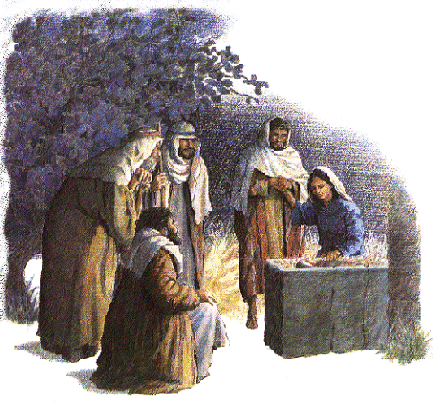
| - | 2:15-20 - Shepherds visit Mary & Joseph & the infant lying in a manger |
| - | 2:21 - The infant is circumcised & named Jesus |
| - | 2:22-38 - Jesus is presented to God in the Temple (incl. Simeon's "Nunc Dimittis") |
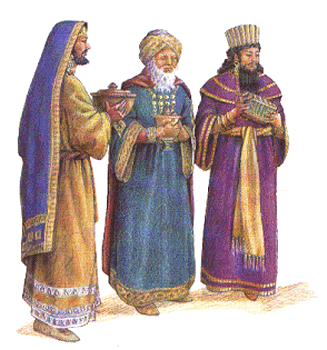
| 2:1b-12 - Magi from the East come; they first visit Herod, then Jesus | - |
| 2:13-21 - Joseph & Mary flee to Egypt with the child Jesus; the Innocents are murdered; the Holy Family returns to Israel |
- |
| 2:22-23 - They journey to Nazareth (for the first time) | 2:39-40 - The family returns to Nazareth |
| - | 2:41-52 - At age twelve, Jesus & his parents visit the Jerusalem Temple |
| . | Matthew 1–2 | Luke 1–2 |
| Driving Force: | Hebrew Scriptures are fulfilled (1:22-23; 2:5-6, 15, 17-18, 23) | Holy Spirit is at work (1:15, 35, 41, 67; 2:25-27) |
| Jesus' Heritage: |
* Son of David, son of Abraham (1:1-17) * Legal son of Joseph, but child of the Holy Spirit (1:18-25) |
* Son of God, son of Mary by the Holy Spirit (1:26-38) * Heir to David's throne, over the house of Judah (1:32-33; 2:4) |
| Names & Titles: |
* Messiah (1:1, 16-18; 2:4) * Jesus: "For he will save his people from their sins" (1:21, 25) * Emmanuel: "God with us" (1:23) * King of the Jews (2:2) * "A ruler who is to shepherd my people Israel" (2:6) * Nazorean (2:23) |
* Jesus (1:31; 2:21) * Son of the Most High; Son of God (1:32, 35) * He will be great, holy, full of wisdom and grace (1:32, 35; 2:40) * "Of his kingdom there will be no end" (1:33) * A Savior is born... who is Messiah and Lord (2:11, 26) * A light for revelation to Gentiles and for glory to Israel (2:32) |
| Characters Emphasized: |
Men: King David, Joseph of Nazareth, Magi from the East, King Herod, chief priests & scribes, Ethnarch Archelaus |
Women: Virgin Mary of Nazareth, Elizabeth, Anna Poor & Aged: Shepherds, Zechariah, Simeon |
| Geography & Chronology: |
Starts in Bethlehem, where Joseph evidently lives. Magi enter the "house" to visit Mary and the "child" (toddler?). Family fees to Egypt (how long?) & return from Egypt (when?). Move north to Nazareth in Galilee (for the first time). |
Gabriel appears to Mary, who is living in Nazareth (Galilee). Family journeys south to visit Bethlehem due to the census; "Baby" (infant!) is laid in a "manger" (no mention of "house"). Return to Nazareth shortly after Presentation in Jerusalem Temple. |
| Themes: | obstacles, conflict, fear, murder, politics | glory, praise, joy; poverty, humility, faith |
| OT Parallels: | Dreamer Joseph (Genesis 37–41) Baby Moses (Exodus 1–2) |
Birth of Samson (Judges 13) Birth of Samuel (1 Sam 1–2) |
| Number Symbolism: |
[King] David = 14 (DVD = 4+6+4); three groups of 14 generations in genealogy; focus on royalty |
70 weeks from Gabriel's first Annunciation to Presentation in Temple? related to 70-week prophecy by angel Gabriel in Daniel 9:24-27? |
| Distinctive Images: |
 |
 |
| Matthew's Gospel | Old Testament Texts |
| Matt 1:3b-6a - [direct quotation of ten generations from Perez to David] | Ruth 4:18-22 - [ten generations from Perez to David] |
| Matt 1:22-23 - All this took place to fulfill what had been spoken by the Lord through the prophet: "Look, the virgin shall conceive and bear a son, and they shall name him Emmanuel," which means, "God is with us." |
Isaiah 7:14 - "Therefore the Lord himself will give you a sign. Look, the young woman is with child and shall bear a son, and shall name him Immanuel." Isaiah 8:8b, 10 - "It [the Assyrian army ] will sweep on into Judah as a flood, and, pouring over, it will reach up to the neck; and its outspread wings will fill the breadth of your land, O Immanuel... / Take counsel together, but it shall be brought to naught; speak a word, but it will not stand, for God is with us." |
| Matt 2:2 - [Magi ask Herod]: "Where is the child who has been born king of the Jews? For we observed his star at its rising, and have come to pay him homage." (cf. 2:8) | Numbers 24:17-19 - "I see him, but not now; I behold him, but not near-- a star shall come out of Jacob, and a scepter shall rise out of Israel; it shall crush the borderlands of Moab, and the territory of all the Shethites. / Edom will become a possession, Seir a possession of its enemies, while Israel does valiantly. / One out of Jacob shall rule, and destroy the survivors of Ir." |
| Matt 2:5-6 - [scribes tell King Herod where the Messiah will be born]: "In Bethlehem of Judea; for so it has been written by the prophet: / 'And you, Bethlehem, in the land of Judah, are by no means least among the rulers of Judah; for from you shall come a ruler who is to shepherd my people Israel.'" | Micah 5:2 - "But you, O Bethlehem of Ephrathah, who are one of the little clans of Judah, from you shall come forth for me one who is to rule in Israel, whose origin is from of old, from ancient days." |
| Matt 2:11b - Then, opening their treasure chests, they offered him gifts of gold, frankincense, and myrrh. | Isaiah 60:3, 6 - "Nations shall come to your light, and kings to the brightness of your dawn... A multitude of camels shall cover you, the young camels of Midian and Ephah; all those from Sheba shall come. They shall bring gold and frankincense, and shall proclaim the praise of the LORD." |
| Matt 2:14-15 - Then Joseph got up, took the child and his mother by night, and went to Egypt, / and remained there until the death of Herod. This was to fulfill what had been spoken by the Lord through the prophet, "Out of Egypt I have called my son." | Hosea 11:1 - "When Israel was a child, I loved him, and out of Egypt I called my son." |
| Matt 2:17-18 - Then was fulfilled what had been spoken through the prophet Jeremiah: / "A voice was heard in Ramah, wailing and loud lamentation, Rachel weeping for her children; she refused to be consoled, because they are no more." | Jeremiah 31:15 - "Thus says the LORD: A voice is heard in Ramah, lamentation and bitter weeping. Rachel is weeping for her children; she refuses to be comforted for her children, because they are no more." |
| Matt 2:23 - There [in Galilee] he [Joseph] made his home in a town called Nazareth, so that what had been spoken through the prophets might be fulfilled, "He will be called a Nazorean." | Isaiah 11:1 - "A shoot shall come out from the stump of Jesse, and a branch (nezer) shall grow out of his roots." |
The Apostle Paul never mentions the birth or childhood of Jesus in any of his writings, nor does he ever name or refer to Jesus' parents, with only one semi-exception.
The Gospel according to Mark does not contain a narrative of Jesus' birth, but it does make a few brief references to his family heritage:
Although the Fourth Gospel does not contain a narrative of Jesus' birth, it does mention his "coming into the world" and "becoming flesh" (Latin: incarnatus est), as well as several debates about his heritage (Is he Judean or Galilean? human or divine?):

All images borrowed from http://www.earlenesroots.com/christmas.html
Eleven Points Shared by the Infancy Narratives of Matthew and Luke (from Raymond Brown, The Birth of the Messiah, pg. 34):
See also my collection of
Resources for Prayer and Liturgy during Advent and Christmas
or more detailed analysis of
The Infancy Narratives in Luke's Gospel

Return to the HOME PAGE of Felix Just, S.J.
This page was last updated on
January 1, 2024
Copyright © 2006; 2024